Showing posts with label Tree Methodology. Show all posts

Monday, June 13, 2011

A Creative Writing Workshop for Nurses and a Tribute, Too

Authors Robert Raymer and Kuan Guat Choo
Nurses have plenty of stories to tell.  They’ve seen it all on their jobs, the daily drama of life-and-death, the painful loss of loved ones (parents losing a child or vice versa), miraculous recoveries after doctors have given up all hope, and even patients falling in love with them.  So I felt honored being asked by the writer Kuan Guat Choo, author of Mouse Clutching Winter Melon and other books, to conduct a creative writing workshop for thirty-three nurses (and several organizers) from the Malaysian Nurses Association over a recent weekend in Kuala Lumpur.

The transition from my two workshops in Kota Kinabalu (a six-hour, and a four-hour) to a two-day (16-hour) workshop in KL went smoothly thanks to the nurses/organizers assisting me all the way from Borneo.  They not only posted the agenda online, but also entertained me during meals and tea breaks with their nursing “war” stories.  These included swapping  'first death' encounters—the first time as a young nurse they encountered a patient who had died.  One even freaked out when that very patient turned out to be still alive.  Although the outside wounds suggested death (partly blown off face and loss of limbs, a soldier caught in a jungle booby trap during the communist insurgency), a more experienced nurse urged her to check his pulse—yes, he was still alive.

One thing I aim for in all of my creative workshops, no matter the duration, no matter the participants, is to keep it lively and low tech to avoid technology glitches that have marred plenty of presentations (a few of my own and others at conferences when the equipment fails to cooperate or a virus wreaks havoc).  So now I use a series of index cards that gives me the flexibility to adjust the tempo merely by changing some of the cards. 

I also make sure that everyone gets involved in the writing process by using pre-writing techniques (and making sure they’re using it properly) while taking them through a series of writing tasks and story starters to to completed first draft.  Besides applying some of my Tree Methodology from Tropical Affairs: Episodes from an Expat’s Life in Malaysia, I use related examples from in Lovers and Strangers Revisited, and also share my judging tips as an editor and a judge in short story contests.

To get them thinking about their own lives, I give them a range of first-person narrative possibilities, from an unusual adventure like "My Four Days with Catherine Deneuve",to something insightful like "Santa Claus Forever" or e learning lesson like when  my five-year-old son Zaini paid me a surprise visit in my creative writing class in “And Please Welcome”.   

After the article appeared in the New Straits Times, an older student, a teacher, quipped, “How can you write 1000 words about a 20-minute visit, when we can’t write about our entire lives in half that many words?”  My reply was, “That’s why I’m here to teach you.”

I taught the nurses, too, whose ages ranged from their early 20’s to 76, taking them through the steps of writing a first-person narrative about a significant, unforgettable experience on Day One.  I held them back from the actual writing until I had them probe further with 5W and sensory detail questions, so when they were finally allowed to write, they were more than ready, since they’ve been thinking about it for a long time, and the results showed!  No surface, off-the-top-of-their heads writing here—I wouldn’t allow it, one of the reasons I take them through the steps so they can produce some­thing not only well written (at least content wise for a first draft) but insightful, too.  The nurses lived up to the challenge.  More importantly, they had tangible proof of their writing to show for their efforts--something they could now work with later on and polish to make even better.
Robert and Zaini, at last year's Popular Reader's Choice Awards
On Day Two, I introduced my now grown up 19-year-old Zaini, who became an honorary nurse for the morning session, which proved to be a bonus for the younger nurses, since I was the only male present.  Several of the nurses, having read snippets about him in their signed copy of Tropical Affairs, asked him to sign their books, too.  I promptly used him as an example for the topic fear (for several years he had a fear of elevators after a bad experience as a toddler), and then I had the nurses explore their own childhood fears.

We then moved into the realm of fiction by brainstorming topics such as “They Found Me” and “He kicked in the Door” which I developed in my creative writing classes at two Malaysian universities so my students could see the endless possibilities that the topic presented limited only by their imagination.  Most of the nurses were able to turn their ideas into a story.

Later, several nurses volunteered to read their narratives, even revealing personal secrets that many of their friends and fellow nurses didn’t know.  Several of these, I felt, had the potential to be published—after some post-workshop writing cleanup—especially those that touched us in unexpected ways.  Particularly one about an on-the-spot offer to adopt one of their patients' new born baby.  Would her husband agree, on such short notice, to make that decision with her, one that will drastically affect their lives for the next couple of decades?  This was a story that had been waiting to be written for over thirty-two years, and it may never have come about had this particular nurse not attended the workshop.

Other stories went back even further, forty-fifty-sixty, and yes, seventy years, including a terrifying (at least for me) account of female circumcision, when two “nurses” visited their house wielding a razor blade and finding her naked hiding under her parent’s bed.  Although retold in a light-hearted, lively manner that only a trained nurse could do, I was caught unaware that this went on in Malaysia for Muslim women.  But that was a long, long time ago . . . Now they do the procedure in hospitals with qualified doctors shortly after the child’s birth, as they did for most of the boys back in the US during my generation.  Thankfully, I have no memory of that!

The things you learn at a creative writing workshop!  From the comments forwarded to me, the nurses learned a lot about writing and were eager for a follow-up workshop so they can improve their writing style, even hoping to have their work edited for possible publication in their newsletter.  Book ideas and an anthology were even bandied about on such topics as “first death encounters” or “first time a patient fell in love with them.”  An example of the latter was being put in the awkward position of having to turn down a marriage proposal from a patient recovering from the trauma of losing his leg.  With all hope gone, he hoped that the lovely nurse taking care of him would also marry him!

I know for a fact that I have learned an awful lot about nurses in those two days, and I do appreciate what they have gone through in their careers as nurses.  I would also like to salute the nurses of the Malaysian Nurses Association, and all nurses around the world, because we depend on them to help us and our families to get through some of the most trying, heart-wrenching periods of our lives.  And yes, nurses do have plenty of stories to share, but so do many of us if we reflect back on our own lives, regardless of our professions. 

The truth is that too often, most of us are too busy living our lives to write, or we tend to think that no one else would be interested in our stories, our triumphs and failures.  So if you’re part of any organization or an association in Malaysia (or this region), and you have a budget for personal development, as the Malaysian Nurses Association thankfully do, you might want to contact me, so I can help you deliver your story into your own eagerly waiting hands . . . .That's doctors—er, I mean, nurses—orders!
                  —Robert Raymer, Borneo Expat Writer

*Here’s the link to the workshop in Kota Kinabalu with three attached blogs from some of the participant and a link to the second workshop in KK.
** And another in Kuching at International Tuition School.

***If you are interested to bring one of my writing workshops to your organizations or association in Sabah/Sarawak/West Malaysia/Singapore/Brunei please contact me at robert@borneoexpatwriter.com  Thank you.


*Announcement latest workshops:  Writing Your Life Stories Workshop—Kuching! 23 June 2012 (with links to other workshops and writing tips!) and also a workshop in KK on 17 June 2012! 

Here are links to some of my author-to-author interviews of first novelists:

Ivy Ngeow author of Cry of the Flying Rhino, winner of the 2016 Proverse Prize.

Golda Mowe author of Iban Dream and Iban Journey.

Preeta Samarasan author of Evening is the Whole Day

Chuah Guat Eng,  author of Echoes of Silence and Days of Change. 

Plus:


Beheaded on Road to Nationhood: Sarawak Reclaimed—Part I 

Tuesday, April 12, 2011

Creative Writing Workshop—Two in Kota Kinabalu

Just back from two back-to-back workshops in Kota Kinabalu (Sabah, Borneo), one a six-hour workshop for Universiti Malaysia Sabah (above) and then a four-hour workshop organized by the KK Theatre Group, SPArKS (see below).

Mark Storey presents a gift to an exhausted Robert Raymer after
6-hour workshop at UMS
The first workshop at UMS, we started out with 30 academic lecturers and tutors, including someone who recognized me from Unimas, a former colleague from USM, and a fellow expat writer, Mark Storey, who organized the event.   

In the second workshop, the ages ran from thirteen to mid-sixties, from secondary students to published authors, including fellow MPH writer, Tina Kisil, author of Footprints in the Paddy Field.  One participant flew in from Miri, one was the daughter of one of the UMS staff that I taught the previous day, and another, Farida, was the mother of a student I taught at USM years ago. In fact, her enthusiasm for bringing a creative writing workshop to KK brought both UMS (Mark) and SPArKS (Jude Day) aboard.  Suddenly I’m in KK conducting not one but two workshops to two very different groups.

Robert Raymer demonstrating the use of clustering.
Also attending the second workshop were two students from IPGK Gaya and three UMS students who were taking creative writing in Malay. They told me how different my approach was from the way they were being taught and how easily they can apply my ideas to generate their own ideas.  At UMS, they’re getting mostly theory but they don’t know what to write, or where to even start!  

I take the opposite approach by leaving the theory where it belongs in the textbooks (see “Tree Methodology”  from Tropical Affairs) and showing them some useful pre-writing techniques that actually work in the real world.  We also use sensory details and 5-Ws as prompts that flood them with even more ideas.  Within minutes they’re eager to write.  Several times, after getting them started, I had to stop them, so we could move on, so I could introduce more story-starter ideas! The important thing is they got started and later they can finish up what they began.

The workshops went so well in fact, it looks like I’ll be back to KK in August for another related workshop and possibly a follow up in November. The one in August, I will be creating two longer writing sessions (one for first-person non-fiction, the other for fiction) so they can produce two finished samples to add to what they’ve already started and hopefully completed. (My final exams at USM were one hour and I was always amazed what they came up with after investing some of their precious time with pre-writing).  Then a follow-up workshop (after they’ve had time to rewrite and polish) so I can critique their opening pages from one of those samples, as I did for the 2009 MPH Short Story Awards when I was one of their judges.  By limiting the size of the workshop to 20-25, we can devote 10 minutes for each participant.

When I did this in Kuching '09, this worked wonderfully. They all benefited no matter whose story we were discussing since the others made similar mistakes in their own stories.  (It’s easier to find mistakes in someone else’s story than your own!) 

When I tried this in Miri '09 (maybe because of all of the advance publicity), it wasn’t as effective because many of the writers had sent in stories via their friends or even their moms, so they weren’t even present for their own feedback, nor could they benefit from the feedback for the other stories! Other writers took advantage of the theater style seating and passed down multiple stories.  One submitted four!  I was furious when I found out later what was going on.  It was so unfair to the writers who were present with their own short stories because we couldn’t get to them all.  This time around, as I did in Kuching, where we sat around one long table, I will personally collect each story from each writer, so everyone present benefits.

When I put on my judging and editor’s hat (as I did briefly in KK), I can show them what is holding back their writing (be it grammar, organization, style, including word choices, repetition, and using tentative or trite expressions), so they, and all those who attend, can take their writing to the next level. Here are the judging tips that I posted for the MPH contest and workshop, the post-contest comments and a little inspiration to prove them wrong, and the story behind the story links, whereby I blogged about the significant changes that I made in the Lovers and Strangers Revisited stories that led to their various publications (80, so far, in 12 countries!)

A one-off workshop—although inspiring and motivating for all—is rarely enough.  One writer in Kuching, was so inspired by one of my workshops at Unimas, he turned his ideas into five hundred page book!  (It still has a way to go, but he sure got off to a great start!)  For others, they’ll eventually get around to doing some writing.  We all know about good intentions, but life and work often gets in the way.  The real learning comes from the actual writing. The doing!
      —Robert Raymer, Borneo Expat Writer

*One of the IPGK Gaya students blogged about the workshop. (Yes, our pictures came from the same source, but he added more!)  So did the gentleman from Miri.  Here's Tina's blog about the same event.

**Here is the follow up KK workshop in August'11And the third KK workshop 22 October '11

***Here's my workshop with Malaysian Nurses Association and International Tuition School in Kuching.

Here's a blog link about being interviewed on TV for Kuppa Kopi.  If you wish to contact me for a creative writing workshop at your school (for your staff or students or both) or your association, I can be reached at robert@borneoexpatwriter.com  


******Announcement latest workshops:  Writing Your Life Stories Workshop—Kuching! 23 June 2012 (with links to other workshops and writing tips!) and also a workshop in KK on 17 June 2012! 

If you are interested to bring one of my writing workshops to your organizations or association in Sabah/Sarawak/West Malaysia/Singapore/Brunei please contact me at robert@borneoexpatwriter.com  Thank you.


Here are links to some of my author-to-author interviews of first novelists:

Ivy Ngeow author of Cry of the Flying Rhino, winner of the 2016 Proverse Prize.

Golda Mowe author of Iban Dream and Iban Journey.

Preeta Samarasan author of Evening is the Whole Day

Chuah Guat Eng,  author of Echoes of Silence and Days of Change. 

Plus:


Beheaded on Road to Nationhood: Sarawak Reclaimed—Part I 


Tuesday, July 6, 2010

Teaching Teachers to Teach Creative Writing

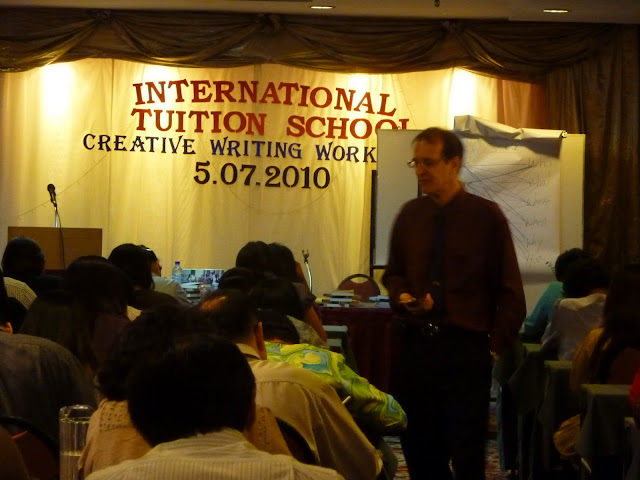
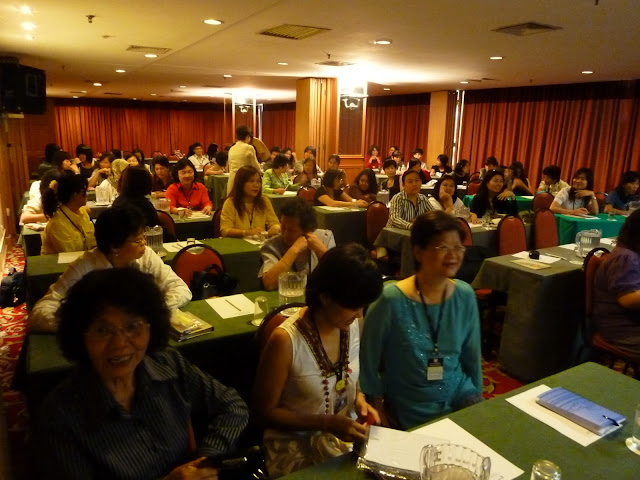
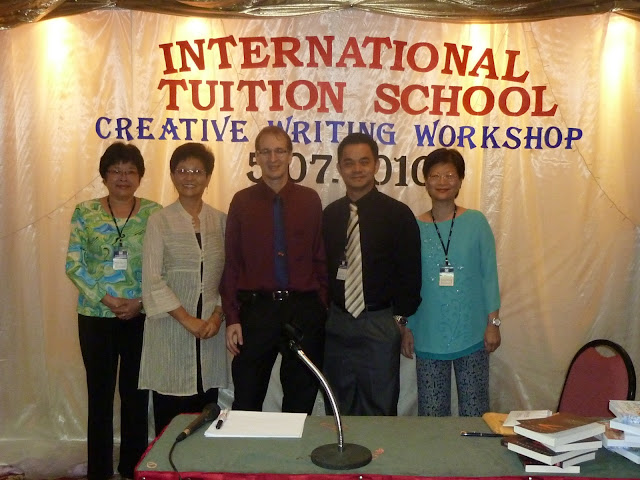
 On Monday (5 July 2010), two days ago, I gave a half day creative writing workshop for International Tuition School in Kuching for about 70 teachers, whereby I combined the best of several of my workshops over the past few years. I applied some of my Tree Methodology (from Tropical Affairs, nominated for the 2010 Popular –The Star Reader’s Choice Award), some of my narrative writing skills, some critical thinking skills that I developed to jumpstart stories, and added some short story writing pitfalls to avoid from my MPH-Short Story Contest talks I conducted as one of the judges for the contest.


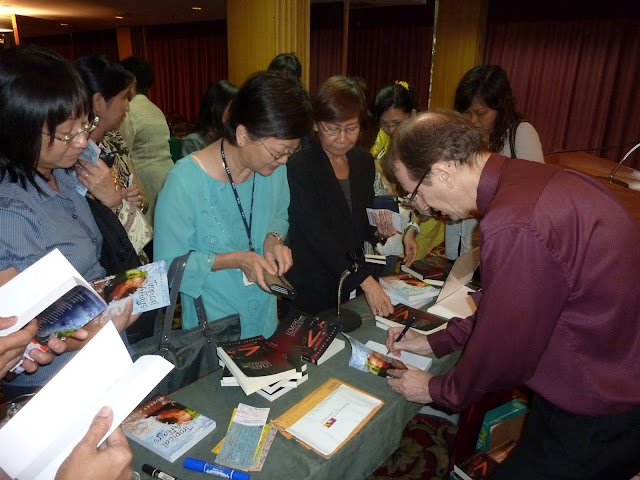
It’s always great to get positive feedback on the day itself, during the beaks, afterwards, and also while signing autographs for my books. But in the back of my mind, I’m wondering, how quickly will the staff actually apply this, and what will be their results? Sometimes, I never know. Other times, I’ll hear back from them or I’ll bump into them at a conference a year or two later.

Well just now I heard from Sheila Khoo, one of the teachers who attended, when she requested that I add her as a friend on Facebook, with the following note, “I was one of those teachers who participated in your workshop on 5 July 2010. It was an interesting one I must say!"

Grateful to hear that and curious to hear more, I added her as a friend. Sheila happened to be online at the time (it was during lunch) and she immediately began to chat with me. (I rarely chat, and if I do, I keep it brief!) She wrote, “Hi, thanks for accepting my request. That was a good one last Monday!”

After I thanked her, Sheila replied, “I was thinking hard on how I should apply all that to my students. I guess time is what we need. We seem to have a bit of time constraint with the syllabus we have. But I would just like to share something which I did just yesterday (Tuesday) with my students (primary). I did some creative writing activity. I made them write something about 'a special gift' within 3 minutes and they did it. Some managed to write quite a few sentences...and they enjoyed it! Lol! I read out their work in class without disclosing who the writers were of course and they really had fun!”

We talked about this at the workshop, the importance of sharing anonymously, so the students can learn from each other. I replied, “When you make it fun and interesting for them, they benefit in more ways than one—especially a personal reflection that makes them think—that's great. Sharing is always good, it allows them to hear what others wrote. It doesn't have to take a lot of time. Could be a warm up, or when everyone is bored or feeling restless. A chance for them to change gears, have a little fun, and then get back to the lessons now that they're refreshed!"


Workshop I’m thinking, this is great! One day you attend a workshop on creative writing and the very next day you apply it, and the students actually have fun! Wow!

During my workshops I don’t go into any theory or my research. That’s boring; they get too much theory from everyone else, especially at conferences, and no clue how to actually apply it so it can work for them! For me, I go straight into what we’re going to do and how you can apply it, and then we do it, so they learn the process and internalize it and feel comfortable using it and they actually have fun, too!

WorkshopThe teachers may not be writers, but with a little confidence and some models and ideas that they can use to teach, to brainstorm ideas, they can inspire their students to write! That’s what teaching is all about, a willingness to try something new that might even be fun for them and their students, and at the same time, the students get a chance to write about something that interests them (and have some freedom to explore a topic, not pigeonholing them so they all have to write an answer in only one way.) This can benefit them in many ways, as they reflect upon what they write and what others wrote. The important thing, they’re being taught to be creative, and these creative writing and brain¬storming skills can be applied to all of their writing—and for the rest of their lives!

Let’s teach them early and put more fun back into teaching of writing—for them and for you as teachers…

* here's a link to two workshops in KK, with blog comments from three participants, and.another in KL for Malaysian Nurses Association
.
**Announcement latest workshop:  Writing Your Life Stories Workshop—Kuching! 28 April 2012 (with links to other workshops and writing tips!) 

***If you are interested to bring one of my writing workshops to your organizations or association in Sabah/Sarawak/West Malaysia/Singapore/Brunei please contact me at robert@borneoexpatwriter.com  Thank you.
****Update, the 20th anniversary of Lovers and Strangers Revisited
 

Here are links to some of my author-to-author interviews of first novelists:

Ivy Ngeow author of Cry of the Flying Rhino, winner of the 2016 Proverse Prize.

Golda Mowe author of Iban Dream and Iban Journey.

Preeta Samarasan author of Evening is the Whole Day

Chuah Guat Eng,  author of Echoes of Silence and Days of Change. 

Plus:

Beheaded on Road to Nationhood: Sarawak Reclaimed—Part I 

Thursday, June 25, 2009

Tree Methodology: a Fun Way to Teach or Learn How to Write

“A fool sees not the same tree that a wise man sees,” William Brake once wrote. My creative writing students are no fools. They just need reminding now and then. Theory is what they get inside the classroom, inside their textbooks, inside their heads as they listen to their teachers. In theory, a tree is just a tree. Or worse, a metaphor, such as the tree of knowledge. True, but trite, and done to death. Alexander Pope wrote about it three hundred years ago:

‘Tis education forms the common mind,
Just as the twig is bent, the tree’s inclined.

Ask your students to write a sentence about a tree and they’ll scratch their heads and look at you funny, but they will come up with a sentence. Then read the sentences aloud, without identifying (or embarrassing) the culprit. This lets the students hear how their classmates approached the same sentence – though with very different, or even startling results.

Some will not be sentences at all, but sentence fragments, missing either a subject or a verb. Now you can turn this into a mini lesson on grammar: what constitutes a sentence and why. Or a lesson on style: are there too many adjectives and adverbs? Are word choices appropriate, or do the connotation of some words go against what they are trying to say? Are the sentences vague or specific? Are they interesting or bland? Are they thought provoking, insightful or as lifeless as a dead leaf?

For another lesson (after they have had plenty of time to forget), ask your students to write a descriptive paragraph or an essay about a tree and they will probably groan. They will say that the topic is boring. It is not the topic that is boring; it is their preconceived ideas about the topic that is boring. They will write, but their writing will lack focus because they are thinking about trees in general.

Instead of probing their brain a little, they will limit themselves to the most obvious details: the leaves, the branches, the trunk, and the roots. And yawn.
“Go beyond the obvious!” I tell them, and they blame the subject. In addition to their lackluster writing, they will be missing an opportunity to learn about writing. So every semester I take my writing students outside for a little tree methodology. Not once, but twice.

First off, writing is about making choices: subject, purpose, approach.
So I approach my tree, point and say, “What is this?”

“A tree,” they all reply, as if I’m stupid.

“You’re wrong!” I reply. Unlike theory, practical experience and life are rarely straight forward. “This is not a tree,” I insist.

They start to protest. “Look at the leaves!”

“Yes, but those leaves don’t belong to the original tree. They belong to the strangler that grew around it and strangled the host.

I point out the hollow inside, where the original tree had decayed. I also show them clumps of old bark trapped among the strangler branches and point to another tree with the same bark.

“That’s your tree over there – that’s what it looked like. So how would you describe this so-called tree?”

“It’s haunted,” a student from Sarawak says, and gives his reasons based on his Bidayuh beliefs about strangler trees.

Fascinated, we all listen and learn.

Others join in, saying why they don’t like this tree, especially after I mention two types of snakes I had seen in the tree as well as a bat. Some point out the trash thrown inside and around the tree, including chunks of concrete, wire, as well as the mosquitoes they are slapping away from their faces and arms.

“So you could describe this tree as a haunted tree and support it with all the examples you just gave me, right?”

They agree they can. They start writing, and I stop them. Writing, as I mentioned, is about choices, so I ask them, “How else can you describe this tree?”

“As a living tree,” a student replies. “It’s full of birds.”

“And leaves,” adds another student.

Forgetting that it is haunted and also the mosquitoes, which seem to have disappeared, they start seeing the vibrant life in the tree: the wide variety of birds and nests and all of the insects.

“Is there another way you can describe this tree?”

They’re stumped.

“Can you climb this tree?” I ask.

“Easy,” some of the guys say.

Noting the wide girth, a lady says, “You can play catch around this tree or hide and seek.”

I ask, “Can you describe this tree as a playground?”

“Yes.”

“What else can you add for support?”

They draw a blank, until I point at a branch, where one section is parallel with the ground.

“You can hang a swing from there!”

Others see the possibilities, as they think back to their childhood.

Writing involves some thinking and reflecting.

The Sarawak student adds, “You could build a tree house, right there,” and points out the branches that would support it.

“Any other way to describe this tree?”

“You could describe it physically,” someone says.

“Yes,” I say, “either an accurate depiction like a painter, or an impression of it – depending on the light, your mood, and your purpose.”

We discuss various ways to approach it as a writer, from a holistic impression to something more straightforward, starting at the top and working down to the roots.

“And you don’t have to describe the whole tree either,” I add. “You could concentrate on the leaves, or the trunk, or the roots, or the branches – one or all of them.”

Students are nodding, seeing the possibilities, limited only by their imagination.

“Any more ways to describe this tree?”

They look at me with big question marks in their eyes as if to say, “You mean there’s more?”

I nod and wait.

“You could describe the ambiance around the tree,” someone says.

“Yeah, the shade,” another points out.

“The breeze.”

“The view.”

We all turn to look away from the tree and admire the surrounding scenery – a view they can’t find in the classroom.

Now the lesson.

I tell them, “I don’t care how you describe this tree, so long as you support what you say with concrete examples, reasons, details and facts. Be selective with your details, too. Don’t start saying this is a haunted tree and end up calling it a living tree or a playground – unless your purpose is to write a compare and contrast.”

Suddenly the topic of writing about a tree is no longer boring to them, and neither will their writing be boring to read. When you give students choices, and let them choose their own approach, they will take a personal interest in the subject – as they did this tree – and their writing will improve dramatically.

Later, back in class, I tell them, if they wanted to, they could also write a narrative about a tree experience they may have had, like the time they fell out of a tree or when the tree down the road fell on a car during a storm. Or they could write an article about the history of an unusual tree, or an essay on why they like a particular tree or the significance of trees in their lives (and in their studies). Or they could even write a poem about a tree or trees in general and emulate Joyce Kilmer who wrote:

Poems are made by fools like me,
But only God can make a tree.

Later in the semester, I will take them outside again to recite their poems – the ones they wrote or ones they wished they had written – beneath another tree. But before we begin, I will teach them about sensory details in order to make their writing more alive for the reader. Again, I get them involved by telling them to close their eyes and concentrate on the sounds, the odors, what they feel (and how they feel), and taste, and have them write them down (momentarily opening their eyes, of course). After about fifteen minutes, we list out what we heard.

“Birds, rustling of leaves, rustling of newspapers (which they’re sitting on), twigs snapping, leaves falling.”

“Traffic,” someone adds.

“Traffic is vague,” I say. “Be more specific.”

“The steady drone of traffic.”

“Better. Is that near or far away?”

“The steady drone of distant traffic.”

“Good.”

Others can hear motorcycles or buses or even an airplane flying overhead.

“Smell anything,” I ask.

“Perspiration, perfume, dirt, dried grass, leaves...”

“Taste?”

“Dryness, an earthy taste, left-over lunch, the hair in my mouth pushed by the breeze.”

“I like that last one – it’s vivid. We can picture it. How about feel?”

“The breeze.”

“Where?” I ask.

“On my face,” says one student.

“Through my hair,” says another.

“I feel totally relaxed,” someone adds. “This is fun!”

Theory is rarely fun, but tree methodology? Every time.

“And sleepy – I was up late last night writing my poem.”

“That’s fine – those are feelings. And yes, you’ll have a chance to read your poem. Feeling anything more?”

“Ants crawling on me!”

“A mosquito bit my leg.”

“A leaf just fell on my head!”

“How is that for inspiration?” I say.

Later, after they recite their poems, I give them a fun topic inspired by the leaf: “It fell from the sky.”

“Now when you write – whether it’s a poem or a narrative or even an essay – try to use sensory details, especially what you see and hear, because you are the eyes and ears for the reader.”

They write that down. I’m getting through.

“Sensory details also makes your writing, your settings, seem more real, too,” I tell them. “But you can’t always go outside to the actual location and describe it. Sometimes, you can only visit it in your mind’s eye. Just tune everything else out and concentrate and let those sensory details inside of your memory come back to you and pretend you’re standing in front of that very tree.”

Since students do not use their eyes often enough (let alone their other senses) to see what’s out there in the real world, away from the classrooms, I remind them of what Helen Keller wrote in an article titled, “Three Days to See.”

...Use your eyes as if tomorrow you would be
stricken blind. And the same method can be
applied to the other senses. Hear the music of
voices, the song of a bird, the mighty strains of
an orchestra, as if you would be stricken deaf
tomorrow. Touch each object you want to touch
as if tomorrow your tactile sense would fail.
Smell the perfume of flowers, taste with relish
each morsel as if tomorrow you could never
smell and taste again. Make the most of every
sense; glory in all the facets of pleasure and
beauty which the world reveals to you through
the several means of contact which Nature provides.


Students, I feel – based on their writing that I have been marking for over a decade – whether English is their first or their second or third language, need less theory and more tree methodology. Otherwise, all of their content seems more or less the same. They need to be taken outside or led to the nearest window to see the world as it is (even if there is not a tree in sight). They need to see the possibilities that are waiting for them to write about. As a teacher, my goal is not just to teach these students to write better, but to teach them to see, to understand, and to appreciate not only trees but also life, as well as the world they are living in, so they too can become wise and see a tree like Blake’s wise man.

Besides, as Goethe once wrote:

Dear friend, theory is all grey,
And the golden tree of life is green.

My point exactly.

# # #
               -Robert Raymer, Borneo Expat Writer,
               from Tropical Affairs: Episodes from an Expat's Life in  Malaysia


* Here's a link to Pre-Writing Techniques that I wrote for The Writer.
**Update, the 20th anniversary of Lovers and Strangers Revisited 


Here are links to some of my author-to-author interviews of first novelists:

Ivy Ngeow author of Cry of the Flying Rhino, winner of the 2016 Proverse Prize.

Golda Mowe author of Iban Dream and Iban Journey.

Preeta Samarasan author of Evening is the Whole Day

Chuah Guat Eng,  author of Echoes of Silence and Days of Change. 

Plus:

Beheaded on Road to Nationhood: Sarawak Reclaimed—Part I