MPH-Alliance National Short Story Prize 2009: Judging tips, Writer’s Workshop in Kuching, and Other Writing Advice to Win by Robert Raymer
Judging MPH-Alliance Bank National Short Story Prize 2009
As one of the judges for the MPH-Alliance Bank National Short Story Prize 2009 (along with Sharon Bakar, Eric Forbes and a representative from Alliance Bank), what will I be looking for in deciding the shortlist and the winner? It’s a given that the story has to be well written, but how effective is the story? What insights do we gain from reading it? Worse, is it a same-old, same-old, or a so-what story? Regardless of how well it is written, if the story is overly familiar, utterly predictable, or merely forgettable, it’s not going to win.
Ideally a story should linger, even haunt you in some way (not in a scary way, but bother you, perhaps; at least make you think about life) so that even a year later, you’re still thinking about that story. Also, I’ll be looking at character motivation, development and change (no change, no story!). Are there conflicts on more than one level? Are the characters memorable? Settings clearly defined? An opening that hooks the reader? Any tension that’s pulls the reader from the beginning to the end? An ending that I didn’t see coming or that resonates in a way that I wasn’t expecting?
Then I’m looking at language, turn of phrases, similes and metaphors, use of irony and symbols. A tall order for a short story, but good stories do that all the time, including children stories, and that’s what makes them effective, significant and timeless!
What I don’t want to see (I know we’ll get a lot of them) is what I call thinking-out-loud-but-doing-nothing-about-it-stories. Whereby all you get are good descriptions (sometimes) and interesting thoughts (occasionally), but no forward action, no character development, no sense of anything happening. In other words, no story!
Workshop in Kuching
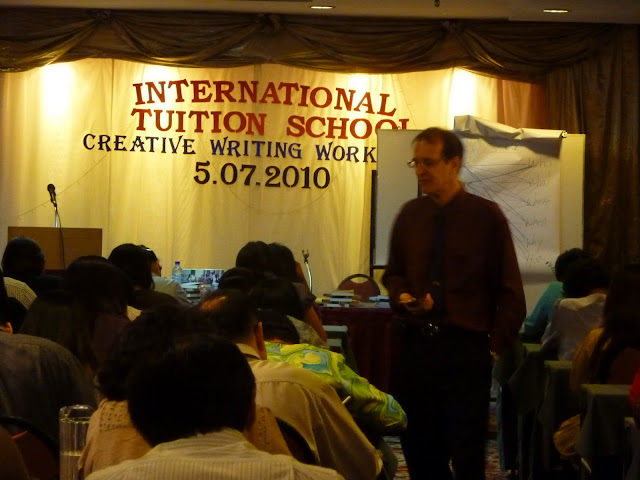
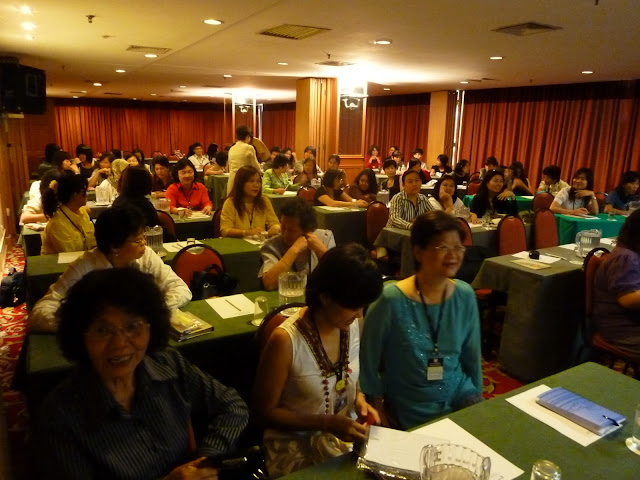
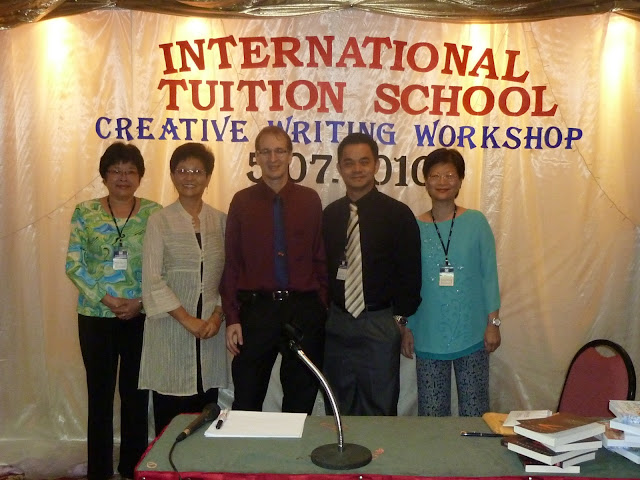
For my upcoming workshop at MPH, titled “Improving the Story”, I’ll be focusing my attention on the beginnings. How ideas can lead to stories, how to start stories, where to start them, viewpoint options, mood, dialogue, as well as some pitfalls to avoid on both ends of the story, including carelessness! Why beginnings? Well most writers don’t get past the beginning (they run out of stream or get bogged down, feel frustrated and give up!). Readers, often don’t get past the beginning either. If it’s bad, why torture yourself to the end? For contests, you can tell within the first two pages (first two paragraphs, really!) whether the story has any merit.
From teaching creative writing for a dozen years, I’ve learned that most unpublished stories (even those completed to the end) go wrong at the beginning! They start in the wrong place, or use the wrong point of view character, or the wrong narrative voice, or their descriptions or settings are vague or non-existent or the opposite, overblown with tons of adjectives and adverbs, with absolutely no forward movement in the story, or its all telling; nothing is being dramatized! Fix these and carry these changes through the story and the story improves tremendously!
I'm recommending that each participant bring the first two pages of their story, typed, which we'll workshop. That means we’ll be reading them aloud and discussing their merits, the good, the bad and the ugly! We’ll also be discussing options and solutions to make the story better, to give it firmer ground to stand on. This will benefit everyone, because a problem in someone else’s story may be your problem, too, and a solution for them, might spark an idea on how to fix your own story. It’s a win-win situation, so long as we keep the comments positive, yet realistic, and our goal is to improve the story.
The more the participants add their own gut level reaction, their views and ideas, the better for everyone. One crazy idea may spark a good one and then an even better one, and suddenly a story that was heading for the trash now has a fighting chance! I use this technique in my creative writing class and it saves the students’ hours of rewriting the wrong story! By the way, if you don’t have a story beginning, how can we improve it? So get working on that story and bring it along!)
Challenge for Malaysians Writing in English
The biggest challenge for Malaysians writing in English, especially those just starting out (and this applies to all beginning writers around the world, including Americans), is that they need to read more. Many of their stories are clichéd, been done-to-death, overly melodramatic, or it’s some watered-down movie or TV program that they saw. Or, it’s purely an imitation of some other writer. Where is the originality? Yes, you can learn from imitating other writers as you learn your craft (many great writers started out this way), but you need to start being you.
Learn from great writers, apply their techniques; just don’t copy their style to the point that you’re a poor imitation of the real thing. Who needs that? Be original, and never, ever plagiarize someone else’s work in an effort to win a prize. Yeah, you might get away with it for a short time, but you will be found out, and it will haunt you for the rest of your life. You’ll be branded a cheat, deservingly, so!
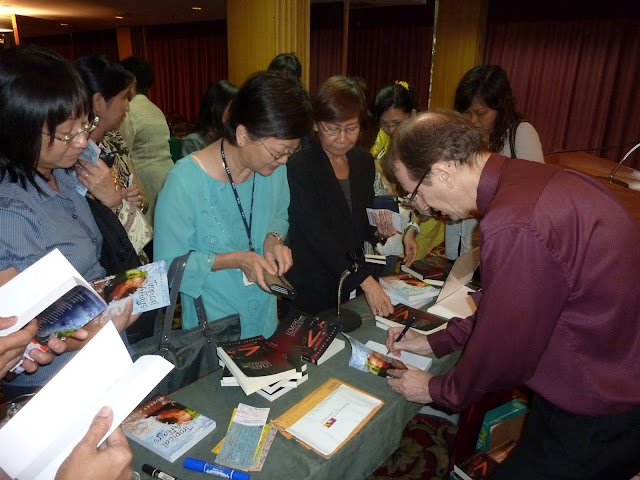
I shamelessly ask my creative writing students to read
Lovers and Strangers Revisited mostly for the various viewpoints (Indian child, Malay woman, Chinese woman, elderly Chinese man and the occasional
mat salleh) to show them the possibilities in writing modern short stories set in Malaysia that do get published overseas. Plus they can ask me, as the author, questions about the writing of the stories that can be insightful even in itself, or I can refer them to my blog series,
The Story Behind the Story of Lovers and Strangers Revisited.
Initially they all want to set their stories in Paris or in Chicago, and what they write is so clichéd and truly awful, that now I insist that they set their story in Malaysia, unless they’re writing sci-fi or fantasy. Recently I was chided by my colleagues for doing this, but they don’t teach or write short stories! I do. I publish them, too. Because the students know Malaysia, they know their characters, their settings, their culture, and their stories are so much better! It works!
Also, they need to get over their reluctance to revise their stories, get past their egos when an editor or a teacher makes a suggestion. They have this, how-dare-you-touch-my-perfect-story! It’s like the way first-time parents see their babies – as perfect. Others see the blemishes and the snot in the nose (not to mention the smell emanating from the diaper), but the parents only see perfection! Whether you choose to ignore the flaws in your story or not, they are there! Editors, from my experience, want the best published version of that story published. They have their reputations, too; and it’s their job! Editors are here to help you – they are not the enemy!
Benefits of Joining Contests, Creative Writing Courses, and Workshops
The prize money that contests usually offer is a huge incentive (plus the opportunity to publish) and the deadline makes sure that the stories actually get written! All the stories that I wrote for Lovers and Strangers Revisited were written or rewritten for one short story contest or another. Even if they were written in a rush, they got written; so later I would go back and revise them.
Creative writing classes also help the writer with their craft. They can learn from their own mistakes, from their instructors, someone who can point them in the right direction. What beginning writers need most, regardless of their age, is encouragement. Someone who believes in your story and who can guide you through the writing process is essential.
But you must be willing to work, to revise, and to listen, and to read the materials and read other short stories. You can’t expect your instructor to take your vague story and turn into something publishable. We can point the way, sometimes edit your work, but you have to do the actual writing, draft after draft. Writing is a process – you have to write and take your writing seriously. If you don’t believe in your story, why should anyone else?
Like most things, writing is a trainable skill. If you add in inspiration and a lot of perspiration and if you find a compelling story that you must write, and write in style that moves you and the reader, nothing can stop you. With enough persistence, you can even publish your work. Talent is one thing, but many talented people give up.
So if you want to write, learn how to write, write often, and enter those contests. Take whatever classes on writing that you can, and attend workshops! It’s a great way to get inspired; being around all those other writers – people with the same interests as you – will spur you on to keep writing. You may even forge friendships and exchange critiques of each other’s work that will benefit both of you for years to come.
Learn from Other Writers
Whenever you can and in whatever way that you can, learn from other writers as to how they achieve their craft. Some writers can be aloof, others overly mysterious. Still there are those who will take the time to break down their work, to strip away some of the magic, just enough to give you a glimpse of the writing process. Gobble this up! That’s exactly what I’ve been doing for my revised collection of short stories Lovers and Strangers Revisited (MPH 2008), in my blog series, The Story Behind the Story.
Because the stories were written and originally published about twenty years ago and had been revised for the original Lovers and Strangers (Heinemann Asia 1993), overhauled for Lovers and Strangers Revisited (Siverfish 2005), and revised again for the MPH 2008, I decided to take a closer look at the writing process for those stories myself. I’m amazed by how much the stories have evolved, matured. At a glance, it may look like the same story, but the differences, are both subtle and stark! Some of the stories had doubled in length. There have been changes of titles, of characters, of beginnings and endings, of point of view, and shifting from past tense to present tense.
Comparing the MPH stories with the story’s blog would be invaluable to writers just learning their craft or wishing to break out of Malaysia. It would also be interesting to readers to see how much the stories, over a span of twenty years, have evolved, and why the stories, like “Neighbours” being taught in SPM Literature and several other stories taught in universities around Malaysia (as well as the collection at USM), still feel timeless today, as has been noted in several recent reviews.
Final advice for entering the MPH-Alliance bank contest
Get an
entry form and go to MPH (or any bookstore in your area) and pick up some collections of short stories in the local fiction section, including
Lovers and Strangers Revisited (*this went on to win the 2009 Reader's Choice award). Learn from those writers and their stories, and let them inspire you! Ask yourself, what is your story really about? Why only you can write it? Then write it! Add your own unique culture and heritage into your story; the stories are so much richer for it! Then write the very best that you can! Write from the heart! Even if your story doesn’t win, you’ll still be a winner because you have enriched your own world! Later, you can always improve the story and even get it published! Good luck!
*If you find this article helpful, pass it along to your writer friends.
Details for MPH, Kuching Workshop:
Title: Improving Your Short Story (for those planning to enter contest)
When: Saturday, 31 January 2009, 10am-1pm
Where: Conference Room, level 2, The Spring, Kuching.
Register: MPH, The Spring (082 244 800), for age 13 and above; first come, first serve; first 25. (If more, another date may be arranged) Cost: Free! Sponsored by MPH
Bring: First two pages of your short story, typed, double spaced
Contest: 27 October 08 – 31 March 09
Update: One of the participants went on to publish two novels,
Iban Dream and Iban Journey. See interview with Golda Mowe below.
*Update, the 20th anniversary
of Lovers and Strangers Revisited
Here are links to some
of my author-to-author interviews of first novelists:
Ivy
Ngeow author of Cry
of the Flying Rhino, winner
of the 2016 Proverse Prize.
Plus:
Beheaded on
Road to Nationhood: Sarawak Reclaimed—Part
I