Thursday, February 17, 2011

Two Sides to Every Story: An Encounter with a Spirit-Part I

Living and writing in a different culture gives you the chance to experience the world from a different perspective.  Of course, it’s what you do with that perspective that matters.  Either you try to understand it, learn from it, or you dismiss it entirely.  Two nights ago, my wife took her mother, a Bidayuh, home after visiting us for most of the day.  Before they even arrived home my wife suspected something was wrong because her mother, who was riding in the backseat, didn’t respond to a couple of questions.

Then when they reached her village in Quop, her mother, who was clutching one of her hands, had no sense of balance; it was as if she had suddenly gone limp.  While helping her out of the car, which she never had to do before, they both fell.  She was also speaking gibberish; my wife couldn’t understand anything that she was saying. With the help of her brother-in-law they took her to the hospital where they conducted several tests, including ct scans, cardiovascular tests, ex-rays, and blood samples.  After several hours she finally could speak normally again.  The doctors concluded she had a mild stroke, but it wasn’t severe enough to admit her.

The following evening my wife was chatting online to her cousin in Kapit; her cousin’s mother was on the phone talking to my wife’s mother at that very moment. My wife’s  mother was telling her cousin’s mother that she had been attacked by a spirit.  She said her hand suddenly started to hit her so she had to clutch it tightly to prevent it from hurting her. She was also trying to speak but the spirit wasn’t allowing her to speak.

Now before you start rolling your eyes, I asked my wife, where did her mother feel this ‘spirit’ came from, since she had been at our place. Our place, as far as I know, doesn't have any spirits.  I hope not.  As it turned out, late that afternoon, they had visited a sprawling nursery that sells flowers and plants.  The owner was telling my wife’s mother how she hurt herself.  She said she was out back when a spirit shoved her from behind.  She said no one else was around.  She insisted she didn’t slip or fall; she was shoved, and when she landed, she broke her wrist. 

After buying some plants, leaving some in the trunk to take back to Quop, they came back to our place, had dinner, and my wife drove her home. By then, she was not looking herself, as if she had been wiped out.  I just assumed that she was tired since she's in her late 60's.  Did this spirit follow her from the nursery?  Did it enter her body?  Then before they even reached her place, just a few kilometers away, she had this “stroke”.

Was it a stoke or did a spirit disturb her?  Or was it a combination of both?  After hearing of this other "encounter" at the nursery, and being highly susceptible herself because of her beliefs that these spirits really do exist, had she worried herself  into a stroke? Again, this is all about your perspective on a different culture.  My wife’s cousin’s mother, by the way, does have some experience in this area. She has a son who was found trying to strangle himself by a huge split boulder not far from my wife’s family home, close to St James church, the oldest Anglican church in Southeast Asia, and the adjacent graveyard.  Spirits have been sighted by that split boulder; people still go there to seek four-digit numbers.  Her son was taken to a bomoh, a witch doctor/healer, before he was taken to a doctor. The family and relatives concluded he had been possessed.  Why else would he try to strangle himself?  The doctors, called it a seizure. After that incident, he has never been the same, in and out of trouble.

Whether you believe in spirits or not is not the point.  If you are familiar with the Bible, and you take that as the word of God or as the truth, well there is ample evidence in the Bible where demons and spirits were driven out of people in order to heal them.  The Chinese here celebrate the Month of the Hungry Ghosts. There are two sides to every story; even doctors don’t always agree.  Again, it’s a matter of perspective from a different culture.  Learn from it, or dismiss it.  As a writer, as a person who has common sense, it’s your choice.  

As a follow up to this, while I gather more facts/opinions by interviewing her mother when she has fully recovered, I’ll relate my own personal encounter with a spirit in her mother’s house that took place 14 years ago.  Up until then, I had off-handedly dismissed such stories.  You can be the judge.  Again, I live in Borneo and many people have been violently killed here, on headhunting raids.  170 years ago Quop was nearly wiped out in one such raid by the Saribas and Skrang Ibans.

Here is the link for Part II, the Shadow Spirit.

Wednesday, February 16, 2011

“The Watcher” Revisited for Chap Goh Meh

Since this is Chap Goh Meh, which represents the fifteenth and final day of the Lunar New Year period and first full moon of the New Year as celebrated by Chinese migrant communities, I thought I’d post my only Chinese New Year story, “The Watcher” which I just rewrote, while revising all of the Lovers and Strangers Revisited stories for the French translation, changing it from the past to present tense.

The story has also been on my mind for the last two weeks since every evening here in Borneo we have been hearing firecrackers.  My six-year-old son Jason asked me why, unlike our neighbors, we don’t have any lanterns up and why visitors don’t come to our house.  “We’re not Chinese,” I told him.  (His best friend, Jun Han, who lives across from us, asked his father the same thing when he saw our Christmas tree last Christmas.)  Then a couple of days ago, another Chinese neighbor gave our boys some sparklers to play with, their first. Watching their terrified and delightful expressions sent me back 25 years to my first Chinese New Year, which triggered the writing of this story.

THE WATCHER
by
Robert Raymer
          Yeoh stares at the surrounding hills of Penang as if searching for a way to escape.  The pervasive stench of incense and charred gunpowder are every­where.  He can even taste the bitter dryness on his lips.  A soft scraping sound catches his attention.  Two palm-size red envelopes are stubbornly being pushed along the concrete drive­way by a persistent breeze.
          Sitting on an old wooden bench in front of his granddaughter’s terrace house, Yeoh coughs and spits and grinds out his cigarette.  He lights another just as the sky erupts into brilliant hues of red, pink and orange, as if illuminated by a gigantic torch.  The colors grow in intensity before gently fading into the soft darkness of dusk, the first evening of the Chinese New Year.
          Across the street, the four Ong children scamper out of their white-stuccoed, red-tiled terrace house.  Laughing and shoving one another, they hurry to the gate, unlock it, and dash between two parked cars.  A passing motorist honks them back nearer to the curb.  One after the other, the children light and toss firecrackers into the street.  The others jump and shout with glee.  So do several Malay and Indian children who react vicariously as they peer through their respective locked gates.
          While backing away from a series of explosions, a toddler from the Lim family next door stumbles and falls.  He lets out a piercing wail.  The other Lim children, too engrossed in setting off their own fireworks, don’t take notice.  Yeoh glares at the child as if willing him to stop his wailing.  The child’s older sister finally picks him up and deposits him inside their house.  She rushes back to the gate and reclaims her position.
          A firecracker explodes beneath Yeoh’s mailbox attached to the front gate.  His eyes, mere slits amid folds of skin, burst open.
          “Hey!  Hey!  Stop that!  Stop that!” he shouts, frantically waving his hands at the Ong children.
They pay him no attention.  The next-in-line Ong tosses another firecracker, and it too lands in front of the mailbox.
          “I said stop that!  Stop that!”
          The Ong children huddle together and whisper among themselves.  Occasion­al­ly they glance his way.
          Yeoh’s granddaughter, Li Lian, appears at the door.
          “Grandpa, let them be.  They are playing.  It’s Chinese New Year,” she says.  “Come inside.  Su Ling and Lee will be here soon.”
          Yeoh grunts, but stays put.  He wants to keep an eye on the Ong children.  He knows exactly what they’re up to.  They’re mocking him.  Always they call him names when they think he can’t hear them.  They say his eyes are like the sun and moon combined—nothing escapes them.  And that he reigns over the street, night and day, like an undying emperor who refuses to relinquish his power.  They even have a special name for him.  They call him “The One Who Watches, or The Watcher.”
          Li Lian pushes back her long black hair and sighs as she withdraws into the house.  In her place, her husband, Khoo, stands at the doorway picking his teeth with his pinky nail that he has let grow to nearly an inch.  When he notices Yeoh looking at him, his chubby face breaks into a grin.
          “I tell you, this year is going to be a prosperous one.  I can feel it in the air.”
          Yeoh does not reply.  To him, this year will be like last year, and the year before, and the year before that.  Every year is the same.  There is nothing for him to do except to sit on the bench and watch.  The Ongs interrupts his thoughts by lighting three packets of fire­crackers strung together.  The firecrackers explode in rapid succession, sounding like machinegun fire, while the strands bounce up and down off the pavement as if performing a miniature lion dance.
          Khoo chuckles with approval.  “Wasn’t that something?”
          Yeoh coughs and spits.  No matter how loud the firecrackers sound, they can never compete with Japanese bombs.  He heard those bombs.  He saw them, too.  He turns his attention back to the hills as his gaze begins to mist.  When the Japanese came, he and his family were forced to flee the soldiers and hide in those very hills.  Food was scarce then, and his two sons died before they learned how to walk.  Only their older sister, Li Lian’s and Su Ling’s mother survived.  With the promise of jobs, the Japanese lured Yeoh and an uncle to Thailand, only to be put to work on the infamous death railway.  His uncle died of dysentery, and it nearly claimed him, too.  In his mind’s eye, he can see the young man he used to be, now a distant stranger who’s watching him like everyone else, it seems, and waiting for his life to end.  He glances back at Khoo, but Khoo is no longer standing in the doorway.

          A car pulls up in front of the house.  Lee’s thin, pockmarked face glistens beneath the streetlight.  He flashes a toothy smile and calls from the window, “Grand­father, you sleeping again?”
          His wife, Su Ling, waves as their three children cry out, “Gong Xi Fa Cai!  Gong Xi Fa Cai!”
          Two of Lee’s children rush past him, eager to join the two Khoo boys inside the house.  Lee shakes hands with Yeoh.  The youngest child, Andrew, clings to his father’s leg like a scared puppy.  He accompanies his father into the house, but before he disappears inside, he casts another look, a look of innocence, back at Yeoh.
          Su Ling crouches down beside Yeoh and wishes him a happy new year.  Her short black hair sways like curtains as she shakes her head.
          “Grandpa, are you in a foul mood again?”  Again she shakes her head, her hair swaying back and forth.  “Andrew has been asking about you.  Please try not to frighten him this time with any more of your ghost stories.  He had nightmares for a week.”
          Moments after Su Ling enters the house, Li Lian steps out and hands Yeoh three red envelopes.  He stuffs them into his shirt pocket.
          “Try to pretend you enjoy giving these,” she urges.  “It means a lot to the children.”
          Yeoh gazes at the golden lotus flower imprint on the envelopes.  He thinks of his two sons who died.  They would’ve been grateful just to have a bite to eat.  He checks the progress of the empty ang pows that he gave to the two Khoo children earlier.  They’re still being pushed by the breeze along the driveway.  One hovers at the edge of the grass, while the other is almost to the gate.
          Three houses away, the Ng children cheer as their father launches a mini fireball.  All along the street, Chinese children emerge from their houses, carrying fistfuls of sparklers, fire­crackers and other fireworks; some sophisticated enough to be sent careening over the red-tiled roofs of terrace houses into a neighboring row.
          Parents assist the younger children and teach them how to light the firecrackers and how to throw them quickly by flicking their wrists.  Occasionally, a firecracker is dropped unlit, or explodes inches away from a child’s hand.  Cars passing through the gauntlet of fireworks wisely keep their windows up, while others are forced to honk and brake to avoid hitting a straying child.
          “Go outside,” Li Lian urges Lee’s three children, “Great Grandfather has some­thing for you.”
          Andrew lags behind, pausing at the door, as his brothers race outside with their hands extended, calling, “Ang pow!  Ang pow!”
          Yeoh takes his time and begrudgingly hands over two of the red envelopes, one to each.
          The boys remove the crisp ringgit notes and toss the empty envelopes onto the pave­ment.  They dash into the house calling for firecrackers, and then hurry back out, led by the two Khoo boys.  The last boy nearly knocks over Andrew, who remains standing at the entrance.  Both sets of parents reprimand the boys for running.
          Moments later, Lee squats down beside Andrew, who’s leaning against the door.  He places several sparklers into his hand.  He turns to Yeoh and says, “You wouldn’t mind helping him, would you?”
          Su Ling crouches down beside her husband and says to Andrew, “You want Great Grandpa to help you, don’t you?”  She smiles at Yeoh.  “On the way over, you were all he talked about.  Do you mind?  It will be good for both of you.”
          “Sure it will,” Lee says, and hands Yeoh a lit candle to help light the sparklers.
          Lee and Su Ling go inside and leave Yeoh alone with the boy.  Yeoh glares at the boy who cowers further into the door.  The two regard one another with mutual suspicion.  Yeoh grinds out the last of his cigarette and waves the boy to come closer so he can get a better look at him.  He stuffs the last ang pow into Andrew’s pocket.
          Shouts of joy ring out from Andrew’s brothers and cousins as they launch a round of fire­crackers.  The Ong children wave at them from across the street and invite them over.  In their haste to join them, the boys leave their gate ajar.
          Yeoh grunts to his feet and snatches the sparklers from Andrew’s hands.  He studies the sparklers as if they were a lost artifact, a key to a long forgotten child­­hood memory, a mystical time and place that he thought never, truly existed.  Using the candle, he lights one of the sparklers.  His eyes open wide as sparks spring into the night.  He hesitates, unsure of what to do next.  He flicks it and a bright line appears, only to evaporate.  He flicks it again.  And again.  He makes circles and squares and figure eights.  He marvels at their fiery paths.  When the sparkler fizzles out, Andrew looks up at him with full-moon expectant eyes.
          Embarrassed that the boy has been observing him, Yeoh lights another sparkler and hands it to the boy.  He also lights another for himself.  This time, he writes several Chinese characters in the air.  After the sparkler dies out, he lights two more; and two more after that.  Each time, he loses himself in his fiery creations.
          Andrew’s brothers call Andrew from across the street, wanting him to join them.  Yeoh pays the boys no attention.  Once again, he raises the sparkler like a baton and orchestrates the night.
          He’s about to light another set of sparklers when he realizes the child is no longer beside him.  He looks around and notices that the gate has been left open.  He spots Andrew standing between two parked cars, about to cross the street.  Coming down the road, its headlights glaring, a car approaches a little too fast.
          Fearing for the child’s safety, Yeoh calls after the boy.  He drops the sparklers and the candle and hurries to the gate.   He calls again, louder.  Only a faint moan comes out of his mouth.
          Fireworks continue to explode all along the street as Yeoh presses his hands to his chest to ease the silent explosion within.  Still moving towards the gate, he falters and collapses onto the concrete driveway, inches away from one of the discarded red envelopes. 
          He doesn’t see Andrew circling around him, nor does he hear the child calling, “Great Grandpa?  Great Grandpa?”
          Lying still, Yeoh feels oddly comfortable, as if he’s floating. . . . In his mind’s eye, all he can see are those beautiful hills of Penang.
#  #  #
*Update, the 20th anniversary of Lovers and Strangers Revisited
 
Here are links to some of my author-to-author interviews of first novelists:

Ivy Ngeow author of Cry of the Flying Rhino, winner of the 2016 Proverse Prize.

Golda Mowe author of Iban Dream and Iban Journey.

Preeta Samarasan author of Evening is the Whole Day. 

Chuah Guat Eng,  author of Echoes of Silence and Days of Change. 

Plus:

Beheaded on Road to Nationhood: Sarawak Reclaimed—Part I

Sunday, February 13, 2011

My Copy of Spirit of Malaysia Has Arrived with an Added Surprise!

Spirit of Malaysia  (Editions Didier Millet, 2011) just arrived at my house in Borneo!  Finally I get to see all of those 150 stunning photos in color in book form.  While working on the project, I had them available on the computer so I could describe them for the photo captions.  My two mock copies that I worked from, one with pseudo Latin text for layout and spacing purposes, and the final version to edit were both in black and white (no color printer at home).  I had forgotten how great those photos were. 

Again, I can’t take credit for them—the photo credits are all listed on the last page.  For a sneak peek, see the link below!  The photos were chosen by Editions Didier Millet even before I was brought on board to write the text.  I was just glad for the opportunity to help out, though initially a challenge for me to relearn Malaysia after 25 years of living here—so much has changed, so many news things to discover! 

Deadlines and a signed contract, by the way, are powerful motivators.  Without them, many books would never get written!

Introduction:

To think of the spirit of Malaysia is to conjure up images of celebration and festivity, a sweeping panorama of kampongs to longhouses, temples and mosques, sleepy provincial towns and modern cities.  A fascinating fusion of tradition and modernity is set amidst a tropical backdrop of lush rainforest, languid rivers and stunning beaches.  Here too are to be found an alluring mix of peoples, religions, customs, architecture and experiences—with Malays, Chinese, Indian, European, Arab, Thai, and indigenous influences blending to create a truly unique nation, rich in culture and heritage.

Table of Contents

Introduction
            History and heritage
            People and cultures
            Food glorious food
            Geography and economy
            Getty Around

Kuala Lumpur
Langkawi and Penang
Malacca
Johor and Negri Sembilan
Northwest Mainland
Pahang
East Coast
Sabah and Sarawak

And for the added surprise, a cool sampling of the photos and turning those pages check this out.  If you've never done this before, put your cursor at the bottom right corner to turn the pages and drag it from right to left.  After a few tries you’ll get the hang of it.  You can also click on it and other places, too.  Just try it and have fun.  This was a first for me, too.  My first entry into the e-book world.  Now I see what the fuss is all about – how they’re making it more like a real book experience.   

Of course, I still prefer the book I just got in the mail today.  This is something I can sink my teeth into! Then there's that new book smell. And the photos are much better!

* Here's also the first review.
**Update, the 20th anniversary of Lovers and Strangers Revisited, my collection of short stories set in Malaysia.

Here are links to some of my author-to-author interviews of first novelists:

Ivy Ngeow author of Cry of the Flying Rhino, winner of the 2016 Proverse Prize.

Golda Mowe author of Iban Dream and Iban Journey.

Preeta Samarasan author of Evening is the Whole Day. 

Chuah Guat Eng,  author of Echoes of Silence and Days of Change. 

Plus:

Beheaded on Road to Nationhood: Sarawak Reclaimed—Part I

Saturday, February 12, 2011

Writers in Borneo Attracting Success

In late November, with nothing official on the horizon in terms of writing assignments coming in or anything being published, I made a subtle change to the title of my blog by adding two more words to the name Borneo Expat Writer: Attracting Success. Within a week I got an offer to write about some hotels for a guidebook and a nibble from a French publisher that turned into something big. Coincidence? Maybe? I don’t think so. More importantly, I quickly acted on both to make sure they came through by taking immediate action and following through.

Then last month, Han, a poet from KL, was coming to Kuching to visit friends and wanted to meet with some other writers, preferably poets. Someone suggested me, and although I’m not a poet, I agreed to meet him and invited a few other writers, most of who could not come because of the extremely short notice. But another American writer who I had recently met did agree to come. Not knowing how familiar Han or his friends were of Kuching, I suggested Khatulistiwa Restaurant, which has a strategic location at the Kuching waterfront.

Altogether it was an enjoyable evening meeting some new people, none of us hardly knew each other. Conversations were a bit disjointed. Dominic, who I had invited along because I was critiquing his book about Bidayuhs and he actually writes poetry (we met at one of my writing workshops), spoke mostly with Tom on one side of the table, while I spoke with Han, and Han’s two female friends, who sat at the end, spoke to each other in Chinese. Then Tom joined our conversation and Dominic pretty much kept to himself, no doubt digesting some of the comments and suggestions I had made about his book just prior to the others arrival.

After Han had to leave to catch his flight home and Dominic returned home, Tom and I started talking, American to American, writer to writer, and stayed another two hours brainstorming ideas about our writing. We agreed to meet again the following month at the same place. Although I had a feeling we were on to something big, a regular gathering of writers in Kuching, something I’ve been wanting for about four years now, I wanted to start this slowly, adding one or two other writers at a time and then see if we can forge something that would be useful to all of us and gradually grow. Tom thought of another writer who has written several books that we both were familiar with but had never met. As it turned out, she was out of the country. I invited Annie who had published some articles, writes a blog, and had written a memoir. I was hoping to encourage her to write more.

My intention was to keep the meeting focused on us, how we could help one another in our writing in a positive, productive way. What I didn’t want was the typical writers get together to gripe about how hard it is to be a writer because of ____. Fill in the blank. Instead what I wanted for us to ask the how questions. How can we achieve our writing goals? How can we improve as a writer? How can we get our blogs better known? How can we attract more success in our writing? How can we publish more books? No easy answers, but the right questions will put you on the correct path.

I also thought it’s a good idea to start each meeting with talking about our writing success since our last meeting. What have we written, sold, published? To attract success you must focus on your success—every day, every week, every month. The more conscious you are about your successes, the more you’ll attract even more successes into your life. Success breeds more success. Even with a little success, achieving a personal goal with your writing, can get you all fired up, even inspired. You start to see the possibilities. And that’s something I’m starting to see while meeting other writers in Kuching.

I’ve also just began tracking my blog stats. In order to get where you want to be, you need to know where you are. That was something that came out of our first two meetings, discussing where we are exactly. Prior to that, I never checked my stats. Didn’t have a clue. Now I know exactly where I’m at. I’m an American expat writer in Borneo @ Borneo Expat Writer: Attracting Success.

*Here's a another view of the meeting from Annie's blog Another Day in Borneo.
** Here's also the follow up blog Two American Writers in Borneo.

***Update: Here's a link to the intro and excerpts, and to four reviews of Trois Autres Malaisie in eurasie.net, Malaisie.org, easyvoyage.com, and Petit Futé mag.

****Here’s an update to the French blog about Trois autres Malaisie, a link to meeting the French translator Jerome Bouchaud in Kuching, and also to order a copy or recommend it to your friends, especially those who would like to know more about Malaysia or have an interest in Southeast Asia.


Here are links to some of my author-to-author interviews of first novelists:

Ivy Ngeow author of Cry of the Flying Rhino, winner of the 2016 Proverse Prize.

Golda Mowe author of Iban Dream and Iban Journey.

Preeta Samarasan author of Evening is the Whole Day. 

Chuah Guat Eng,  author of Echoes of Silence and Days of Change. 

Plus:

Beheaded on Road to Nationhood: Sarawak Reclaimed—Part I.

Wednesday, February 9, 2011

A French Translation for Lovers and Strangers Revisited-- it's Official!

It’s official—the contract has been signed—Lovers and Strangers Revisited is going to be translated into French by Éditions GOPE, who specialize in Southeast Asia.  The French version will be sold mainly in France, but also in Hong Kong, Thailand and Cambodia and marginally in Switzerland and Belgium. 

(*Update: here a link to the introduction and excerpts to four of the stories, and below are links to four reviews, and where to order books for yourself or for your friends.)

Although they’ll be using the same cover, the French title will be "Trois autres Malaisie" which literally translates as "Three Other Malaysia". As Éditions GOPE explains it, it’s a short way to say “let's discover three faces of Malaysia, the Malay, the Chinese and the Indian”.  (Living in Sarawak, I’m aware that is not true, but it is for most of Peninsular Malaysia.)   

The main reason for the title change is because the book will be a part of a series of three books. Trois autres Thaïlande by Etienne Rosse is the first book, already published, mine will be the second book, and the third will be about the Philippines. What these books have in common is that they’re collections of short stories that are mainly portraits of the people in the countries where they are set.


As you can see, when you compare the Thai book to mine, there’s even a one eye motif on the two covers.  Éditions GOPE has already set up a website/blog for Trois autres Malaisie similar to what they’ve done for the Thai book.

Translating it into French will add about 20% to the length, so two stories may have to be dropped.  For now we’re considering “Waiting” and “Dark Blue Thread” (since it deals with issues that are similar to “Only in Malaysia”, one of the two stories added to the MPH 2008 edition). *(update) I just found out that a third story will be dropped, "Transaction In Thai" since it is set in Thailand, though a French translation is being used for promotional purposes in Thailand.  

Yes, I will be re-editing the stories again; several have already been done in my on-going efforts to publish more of the stories in the US market.  No, I won’t be translating my story-behind-the-story blog series into French.  Then again, who knows?  
    
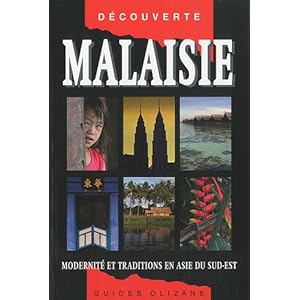
For an extra Malaysian touch, the French translator, Jerome Bouchaud has written a guidebook on Malaysia "Malaisie - Modernité et Traditions en Asie du Sud-Est", and is based here in Langkawi.

Guide Malaisie - Traditions et modernité en Asie du sud-estI’m hoping all of this will lead to the English version of LSR to finally break away from Malaysia/Singapore to a much wider audience, as have many of the individual stories including “On Fridays” recently published in Cha one of the two stories that initially attracted their attention.)

So the legacy of the original collection, Lovers and Strangers, published way back in 1993 by Heinemann Asia for their “Writing in Asia Series” continues to grow. . . .As of now, the collection has been published three times in English, and the 17 short stories set in Malaysia have been published 78 times in 11 countries, taught in SPM literature, several universities and private colleges, and the MPH edition even won the 2009 Popular-The Star Readers Choice Awards.  Not too bad, and now it’s getting translated and going to France!  

So it looks like Mrs. Koh  from “Neighbors” will soon be gossiping and bad-mouthing people in French!  There goes the neighborhood.

Here is the new cover:


*Update: Book orders for Trois autres Malaisie.    E-book orders.  Or recommend it to your friends, especially those who would like to know more about Malaysia or have an interest in Southeast Asia.
  
Here's a link to the intro and excerpts, and to four reviews of Trois Autres Malaisie in eurasie.net, Malaisie.org, easyvoyage.com, and Petit Futé mag.

**Here’s an update to the French blog about Trois autres Malaisie and my involvement in a French documentary for Arte (June 2017) on The Sensual Malaysia of Somerset Maugham.

***Update, the 20th anniversary of Lovers and Strangers Revisited

 
Here are links to some of my author-to-author interviews of first novelists:

Ivy Ngeow author of Cry of the Flying Rhino, winner of the 2016 Proverse Prize.

Golda Mowe author of Iban Dream and Iban Journey.

Preeta Samarasan author of Evening is the Whole Day. 

Chuah Guat Eng,  author of Echoes of Silence and Days of Change. 

Plus:

Beheaded on Road to Nationhood: Sarawak Reclaimed—Part I 
 

Monday, February 7, 2011

Spirit of Malaysia - advance information. In bookstores soon!

• 978-981-4477-35-6
• RM49.90
• December 2010
• Readership: General and tourists
• 80 pp
• 260 mm x 220 mm (portrait)
• Soft cover
DESCRIPTION
Malaysia – the multi-faceted tropical nation at the heart of Southeast Asia – has a spirit of its own. A melting-pot of Malay, Chinese, Indian, colonial and indigenous influences has created a stunning array of landscapes, architecture, culture and festivals. Spirit of Malaysia takes the reader on a whirlwind tour – from the bustling metropolises of Kuala Lumpur and George Town to the tranquil padi fields of Kedah and from the rainforests of Sarawak to the idyllic beach resorts of myriad tropical islands. Packed with up-to-date photographs of the country’s varied treasures this fascinating visual feast is the ultimate souvenir for visitors wanting to capture the true spirit of Malaysia.

HIGHLIGHTS
• Contemporary design
• Visually driven layouts containing more than 160 stunning photographs
• Maps of Peninsular Malaysia, East Malaysia and Kuala Lumpur
• Introduction covering Malaysia’s history, geography, economy, people, culture, arts and travel network

AUTHOR
Robert Raymer has lived in Malaysia for more than 20 years, and is now based in Kuching, Sarawak. He taught creative writing at Universiti Malaysia Sarawak (Unimas) and prior to that was at Universiti Sains Malaysia in Penang. Hundreds of his articles and short stories have appeared in dozens of publications including The Literary Review, Thema, London Magazine, My Weekly, Silver Kris, Going Places, The Writer, and Readers Digest. He is the author of the books Lovers and Strangers Revisited (MPH: 2008), a heavily revised and expanded version of Lovers and Strangers (Heinemann Asia: 1993), and Tropical Affairs: Episodes from an Expat’s Life in Malaysia (MPH: 2009).
***
Above is the advance info sheet sent to bookstores from Editions Didier Millet for Spirit of Malaysia (though I messed up the nice graphics) soon to reach the bookstores. Here are a couple of links to photographers whose pictures are in side for a sneak peak. Most of them have already received their copy. My copy is on the way. Always an exciting moment for the writer, and for everyone involved in this project. A better moment is seeing it in the bookstores. And in someone's hand! While they are reading it. Caught in the act. This has only happened to me once outside of a bookstore, at the Kuching airport. Hey, that's my book!


*Here's an updated link with an e-book view of some of the photos.
** Here's also the first review.

***Update, the 20th anniversary of Lovers and Strangers Revisited, my collection of short stories set in Malaysia.

Here are links to some of my author-to-author interviews of first novelists:

Ivy Ngeow author of Cry of the Flying Rhino, winner of the 2016 Proverse Prize.

Golda Mowe author of Iban Dream and Iban Journey.

Preeta Samarasan author of Evening is the Whole Day. 

Chuah Guat Eng,  author of Echoes of Silence and Days of Change. 

Plus:

Beheaded on Road to Nationhood: Sarawak Reclaimed—Part I

Friday, February 4, 2011

We Are Who We Choose to Be

 
This is a powerful Will Smith interview whereby he talks about the Law of Attraction, The Alchemist by Paulo Coelho, and getting ahead in life by choosing who you want to be. This is from a guy who has done some amazing things in his life starting as a hit-making, song-writing teenager, to a star in of a hit TV program, to a string of iconic movies.  And yes, he still sings. 

What he says also applies to writing, choosing who you want to be and out hustling others to get the deals you want and that means beating out those who are more talented, more smarter than you.  When it comes to writing, talent is a given, but it's not enough.  It often comes down to, how how hard are you willing to work, and how bad do you really want it.  

For example the Amazon Breakthrough Novel Award, I know some talented, unpublished writers, who are thinking about entering, but who probably won't get around to it, or others who will try on the last day and find themselves closed out and will make excuses, blaming everyone but themselves.  

Meanwhile, I'm working around the clock rewriting novels, redoing the excerpts, and going over those pitches until I'm sick of them, but that's what it takes.  I may not win, I may not even get to round two, but right now, like everyone else who has entered, I have a chance, and I'm taking that chance given to all of us.  It comes down to what choices are you choosing to make? It comes down to  pushing yourself just a little harder to get where you want to be.

I believe, if you put your self out there, if you give yourself a fighting chance, magic will happen.  At the very least, you can tell yourself, you did your best, and you went down fighting.  And who knows, your dreams might even come true. Will Smith is living proof of that.

*Update, the 20th anniversary of Lovers and Strangers Revisited

Here are links to some of my author-to-author interviews of first novelists:

Ivy Ngeow author of Cry of the Flying Rhino, winner of the 2016 Proverse Prize.

Golda Mowe author of Iban Dream and Iban Journey.

Preeta Samarasan author of Evening is the Whole Day. 

Chuah Guat Eng,  author of Echoes of Silence and Days of Change. 

Plus:

Beheaded on Road to Nationhood: Sarawak Reclaimed—Part I